
The horse-racing headline is the acquisition layer
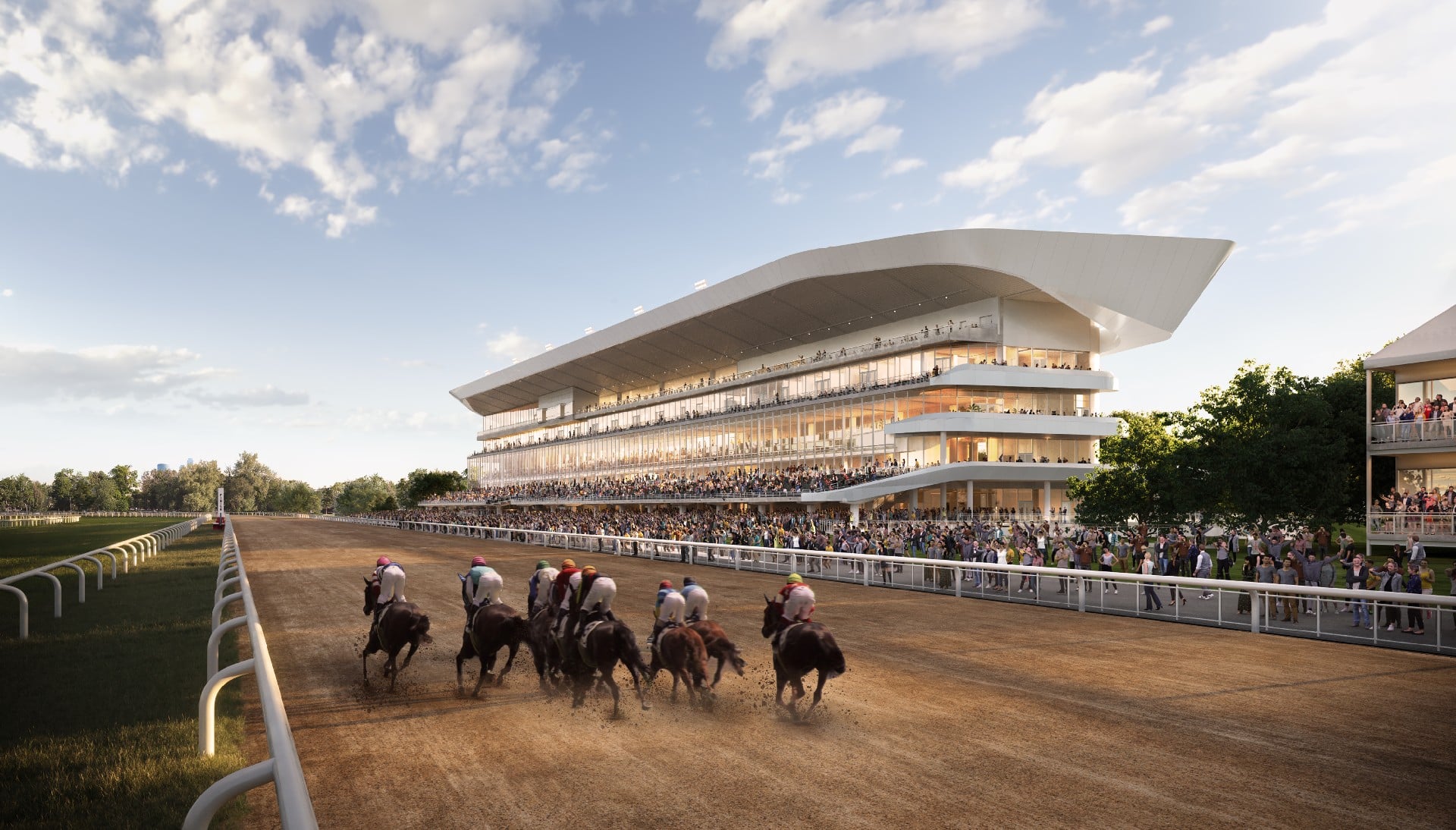
Belmont Park reopened to live racing on September 18 after a three-year redevelopment. Japanese star Forever Young won the Grade 1 Jockey Club Gold Cup in front of the new grandstand, giving the reopening an immediate sports hook.
But the built-environment story is larger than a renovated racetrack. New York used the Belmont project to consolidate downstate racing onto one campus. That decision changes two major pieces of land at once: Belmont becomes a smaller, year-round venue, while Aqueduct Racetrack in Queens becomes available for redevelopment.
The first receipt: a much smaller building
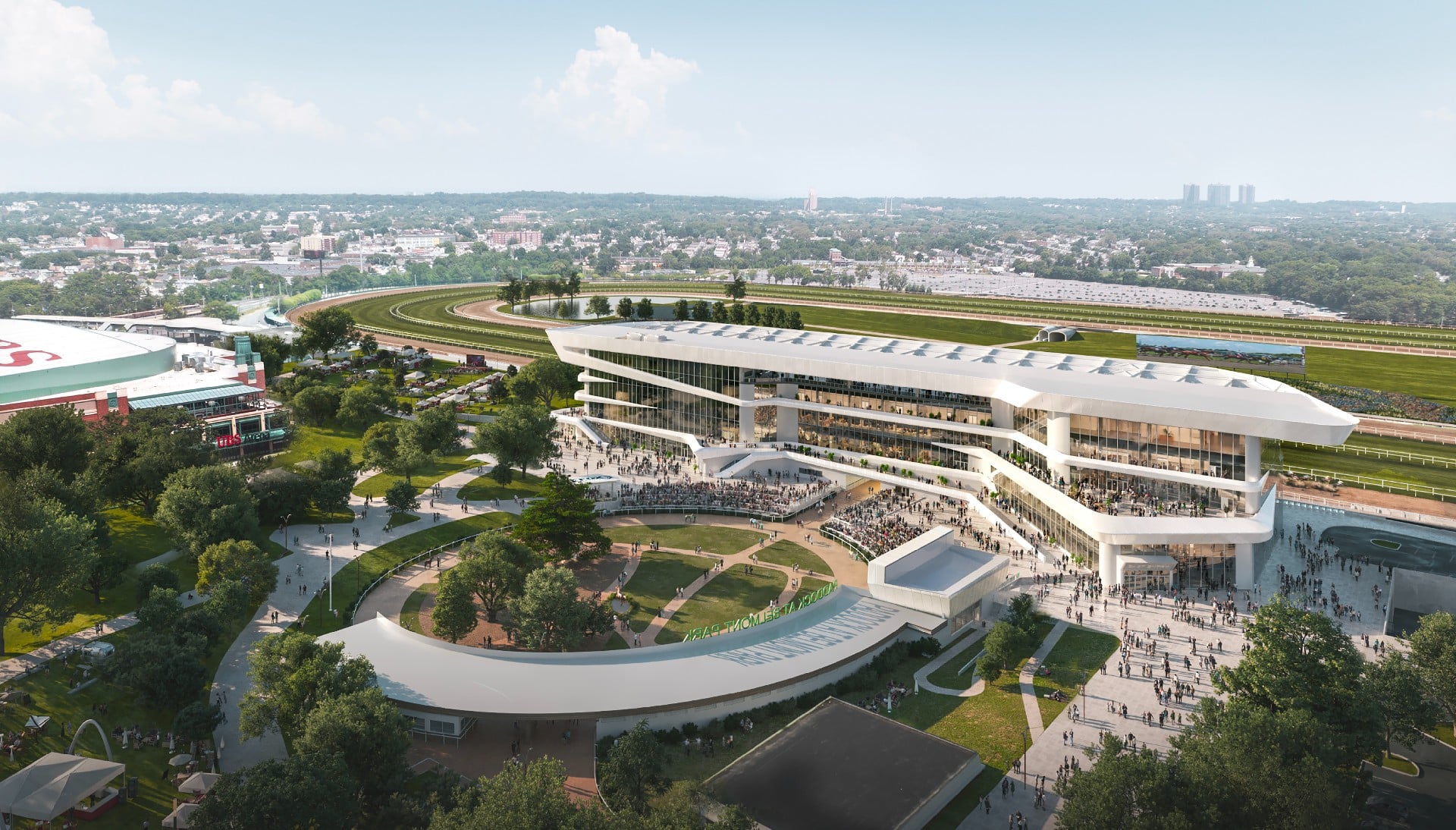
NYRA says the new Belmont is centered on a roughly 300,000-square-foot, five-story building. The structure it replaced was about 1.25 million square feet. In other words, the new venue uses roughly one-quarter of the old building area while retaining the ability to scale the broader property for major events.
New York authorized a $455 million loan for the Belmont modernization. The rebuilt campus also adds a one-mile synthetic Tapeta track, renovates the main dirt and turf courses, opens the infield to fans through new tunnels and creates more accessible green space by shrinking the grandstand footprint.
The second receipt is 100 acres in Queens
Aqueduct's final race day was June 28. The state says the transition of racing operations to Belmont frees approximately 100 acres of state-owned land in South Ozone Park. Earlier state project materials described the development opportunity as 110 acres; the current Empire State Development planning process describes the master-plan site as approximately 100 acres. PropertyLabs treats that as a difference in project definition or rounding, not evidence that ten acres disappeared.
Empire State Development launched community planning in May. The state says potential uses include housing, public open space, retail and community facilities, with a refined master plan expected in early 2027. After that come environmental review, public approvals and one or more competitive developer RFPs.
That sequence matters. Aqueduct is not a 100-acre housing project today. It is state-owned land in a master-planning process where housing is one explicitly identified potential use.
One sports project, two land-use transformations
This is the useful PropertyLabs thesis. A stadium or venue project should not be measured only by the building that opens. Sometimes the larger real-estate consequence is the land that an operating consolidation releases somewhere else.
At Belmont, the physical move is compression: a 1.25-million-square-foot grandstand becomes roughly 300,000 square feet, while the campus gains flexible outdoor capacity and year-round racing infrastructure. At Aqueduct, the move is release: a roughly 100-acre state property enters a planning pipeline for entirely different urban uses.
For development researchers, the next receipts are not race results. They are the Aqueduct master plan, environmental-review filings, land-use approvals, RFPs, developer selection, demolition and site-work records, then building permits. That is where a possible housing story becomes a physical-development story.
What PropertyLabs would watch next
The clean research question is whether the consolidation of a legacy sports use can unlock enough developable land to matter at neighborhood scale. The Aqueduct site is large enough that infrastructure, street layout, utilities, open space and phasing may matter as much as any eventual building count.
PropertyLabs' New York permit and development coverage provides the broader state research entry point. For Aqueduct itself, planning documents and state procurement records remain the appropriate evidence until physical projects reach permitable stages.
Methodology and caveats
PropertyLabs reviewed current NYRA opening materials and New York State releases covering the Belmont capital project and Aqueduct planning process. The $455 million figure is the state-authorized Belmont modernization loan/capital construction figure, not a claim about every public and private dollar associated with the broader campus. The roughly 300,000-square-foot figure is NYRA's current description of the new grandstand; older state materials used roughly 275,000 square feet. We do not treat that documentation change as construction growth without a reconciled scope source.
Likewise, the state has described the Aqueduct opportunity as both approximately 100 acres and 110 acres at different stages. We use the current approximately 100-acre master-plan description and do not infer an economic or physical change from the differing source regimes. Housing is a planning objective and potential use, not an approved unit count or construction start.
Sources
- NYRA: Belmont Park opening and venue facts
- NYRA: Forever Young wins the Jockey Club Gold Cup on reopening day
- Governor of New York: Belmont Park construction milestone and Aqueduct transition
- Governor of New York: Aqueduct community planning process
- Governor of New York: Belmont Park modernization project