Physical AI needs physical space
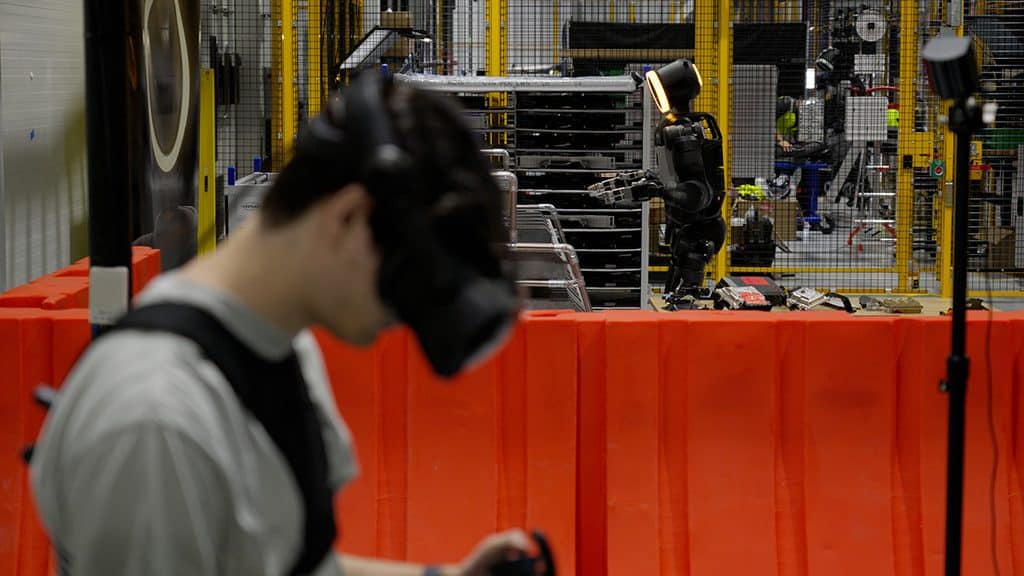
Boston Dynamics announced September 21 that the first phase of its Robotics Metaplant Application Center is operating inside Hyundai Motor Group Metaplant America near Savannah, Georgia. Atlas robots are being trained in real manufacturing conditions, beginning with logistics and parts-sequencing work.
The important real-estate detail comes later in the release: Boston Dynamics says the operation will move into a new building at HMGMA in 2027, expanding the application center to approximately ten times its current size.
A robot lab is becoming factory infrastructure
This is not a conventional software deployment. Training a humanoid for industrial work requires a controlled physical environment that reproduces the workflows, equipment, safety constraints and edge cases of a factory. Boston Dynamics describes RMAC as a testbed for integrating Atlas directly into automotive manufacturing operations.
That makes “physical AI” literal from a property perspective. Model development is tied to floorspace, manufacturing lines and purpose-built training environments.
The host building is already unusually automated
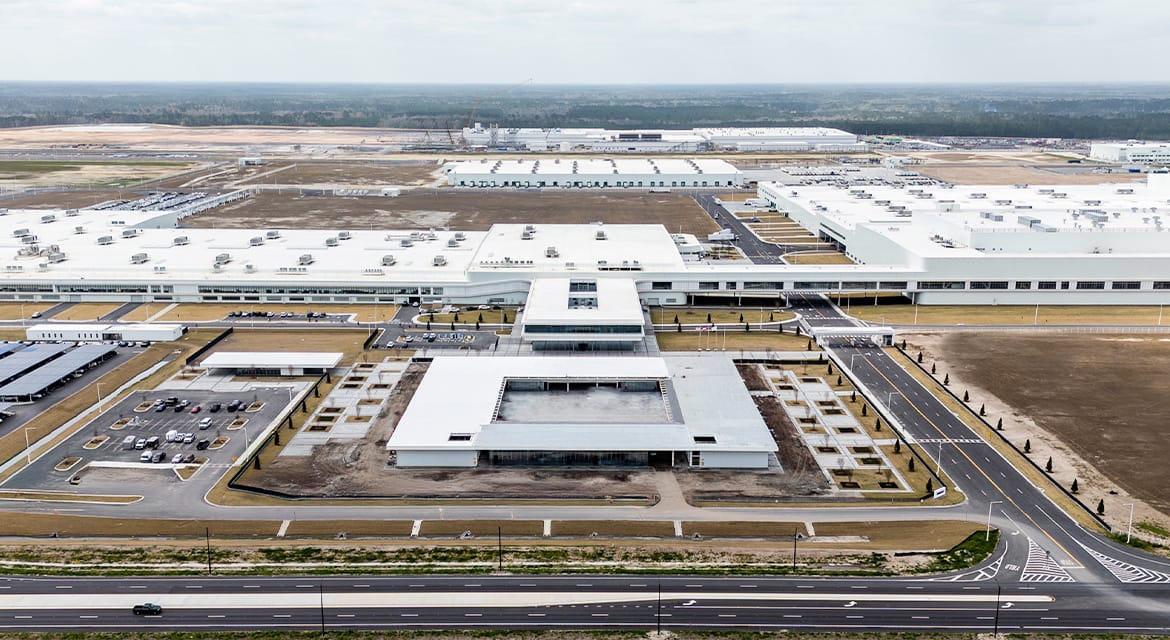
Hyundai describes HMGMA as a highly connected smart factory whose order, procurement, logistics and production processes use AI and real-time data. The plant already uses Boston Dynamics' Spot for exterior quality inspection, automated guided vehicles and parking robots.
HMGMA sits on a 2,906-acre megasite. Hyundai has said the Georgia plant and associated battery ventures represent $12.6 billion of investment. RMAC is therefore being embedded inside an existing industrial ecosystem rather than built as an isolated robotics laboratory.
Do not combine the two future buildings yet
Boston Dynamics also says Hyundai Motor Group plans a U.S. production facility capable of making 30,000 robots annually. Hyundai previously announced that robotics facility as part of its U.S. investment program.
The available sources do not establish that the planned 30,000-unit production facility is the same building as the 2027 RMAC expansion. PropertyLabs therefore treats them as separate announced physical programs until a site, permit or company disclosure connects them.
The next receipt is a building record
Boston Dynamics has given the market a construction clue before giving it a square-footage number: a new building, at HMGMA, in 2027, with an application center approximately ten times larger than the current operation.
That creates a concrete PropertyLabs research question. When the expansion moves from corporate announcement to physical execution, which local or state development records identify the building, scope and contractor? That is the point where a robotics story becomes a construction record.
Methodology and caveats
PropertyLabs reviewed Boston Dynamics' September 21 RMAC announcement and Hyundai's official HMGMA and U.S. investment disclosures. “Ten times” is Boston Dynamics' description of the future RMAC scale, not a PropertyLabs square-footage estimate. We do not infer the current or future RMAC area from that ratio.
We also distinguish an operating application center, an announced 2027 building expansion and Hyundai's separately announced 30,000-unit annual robotics production facility. No permit number is assigned here because the sources reviewed do not establish one.