
California just moved the AI fight into the development stack
Governor Gavin Newsom signed seven data-center bills September 21 covering electricity, water and land use. The package is being described as a crackdown on AI infrastructure. For development researchers, the more precise change is that resource capacity is moving closer to the front of the project timeline.
California says the new laws require more information about proposed data centers' water and electricity use, make data centers responsible for certain grid and water-system upgrade costs and change how the projects can qualify for environmental-review streamlining.
That is not a statewide construction ban. It is a change in what a developer may have to demonstrate, disclose and pay for before a proposed project can advance through the relevant approval stack.
The surprise: the scarce development input may not be land
Traditional site selection starts with parcels: acreage, zoning, access, labor and price. AI-scale infrastructure makes another set of site attributes unusually consequential: megawatts, transmission capacity, cooling water and the cost of connecting both.
California's package makes that physical constraint harder to separate from land-use review. The governor's office says proposed projects must provide information to local governments and water suppliers about water use, supply, efficiency and drought planning. Required water-supply upgrades are to be paid for by the data center. On electricity, the package directs costs for necessary grid upgrades toward the large-load customer rather than ordinary ratepayers.
In other words, a parcel can look developable on a map and still face a second real-estate question: can the infrastructure around it carry the use?
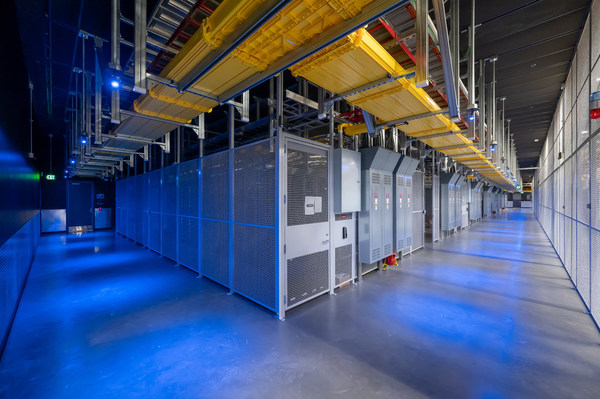
A live California example shows why the distinction matters
Equinix's SV12x at 123 Great Oaks Boulevard in San Jose is a two-story hyperscale facility. Equinix originally announced a $600 million joint venture with PGIM Real Estate to develop and operate it, with more than 28 megawatts of expected capacity at full build-out. Equinix's current facility page lists 113,000 square feet.
Those numbers describe an actual physical asset. They do not mean California's new laws retroactively create a new permit event for SV12x, nor does PropertyLabs infer that this operating facility is being delayed by the legislation.
The site is useful because it makes the policy tangible: a data center is not just a warehouse with servers. It is a building attached to a much larger utility system.
California and Texas are arriving at the same development question differently
The timing is notable. Texas separately directed its environmental regulator to stop issuing permits sought by data-center projects pending state grid and water audits. California has chosen a seven-law package focused on disclosure, infrastructure cost allocation and environmental review.
The legal mechanisms are different, and PropertyLabs does not treat them as equivalent. But both expose the same research problem: the AI buildout is increasingly constrained by infrastructure outside the building envelope.
That makes the useful dataset larger than building permits alone. The next generation of data-center development intelligence needs to connect parcel and permit activity with utility upgrades, water commitments, environmental review and interconnection milestones.
See our Texas data-center permit analysis for the parallel state-level development gate.
What PropertyLabs will watch next
The most defensible way to measure the effect is project by project. For new California data centers, the useful sequence is proposal → resource disclosures → environmental review → utility commitments and upgrades → local approvals → issued building permits → physical construction.
If projects disappear before a permit is issued, that is different from permits being issued and construction slowing. If a city feed changes fields or stops publishing values, that is a source-regime change, not evidence that investment collapsed. PropertyLabs will keep those categories separate.
Methodology and caveats
PropertyLabs reviewed the governor's September 21 announcement, the seven-bill description, Equinix project and facility material and contemporaneous reporting. We use SV12x only as a physical California data-center example and do not claim the legislation created a new permit, approval or construction event for that facility.
The laws have different operative provisions and implementation timelines. This article therefore describes the development direction of the package rather than asserting that every requirement applies identically to every existing, proposed or future data center. A state law, environmental review, utility agreement, local entitlement, building permit and construction start remain separate milestones.
Sources
- Office of Governor Gavin Newsom: Seven-bill California data-center package signed September 21
- Equinix: SV12x San Jose data-center project and facility photography
- Equinix: SV11 San Jose facility photography
- Equinix: Current SV12x facility specifications
- Reuters: California data-center oversight package