
The football building is only a fraction of the site
The District is submitting its final RFK Campus Master Plan to Council on September 24 after a planning process that included more than 30 engagement events and close to 1,800 participants. The plan is intended to turn the former stadium campus into connected districts with housing, parks, recreation and entertainment that function on game days and ordinary weekdays.
The useful scale comparison comes from the underlying stadium agreement. The Commanders said the approximately 65,000-seat roofed stadium would occupy only 11% of the 180-acre campus. That means the NFL venue can dominate the headline while most of the physical land sits outside the stadium footprint.
The other 89% is where this becomes a city-building project
The June draft master plan divided the campus into six districts and described roughly 5,500 to 6,500 homes, with at least 30% affordable, alongside commercial space, parks, recreation and a new roadway system. The Commanders are responsible for stadium-related districts while the District controls other portions of the campus.
That distinction matters for property research. A stadium can be tracked as one enormous capital project. A mixed-use district creates a much longer chain of parceling, infrastructure, entitlements, vertical projects and permits that can appear at different times and under different applicants.
Before the apartments come the streets, utilities and public realm
The stadium deal separately identifies public spending for horizontal work, parking, utilities, roadways and transit planning. Those are not side notes. They are what allow the surrounding parcels to become developable urban land rather than leftover stadium acreage.
This is the part of stadium economics that is easy to miss when attention stays on renderings and seat counts. The building is one node. The development platform is the serviced land around it.
RFK is already moving through multiple development milestones
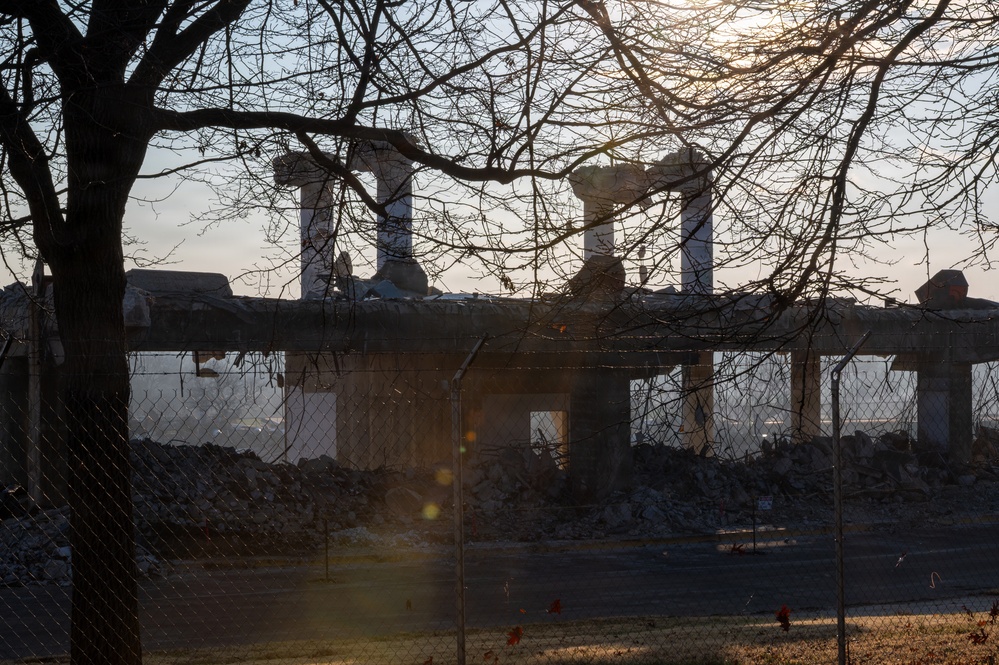
The old stadium is not simply waiting for a future groundbreaking. Events DC says structural demolition is complete, remaining foundation removal is underway and crushed concrete is being reused as graded backfill on site. Closeout is expected in October 2026.
At the same time, the new stadium has moved through conceptual federal design review and the broader campus has moved through master planning. These are different milestones. Demolition is physical work. A master plan is a land-use framework. Neither should be reported as a building permit for the future housing.
The PropertyLabs research question
The next useful dataset is not one giant RFK permit. It is the sequence of records that turns the master plan into buildable parcels: zoning actions, infrastructure packages, procurement, subdivision or parcel actions, development applications and eventually permits for individual buildings.
That sequence will reveal whether the promise of a 365-day district is actually materializing outside the stadium. The strongest signal will be when the non-stadium land begins generating its own independent development pipeline.
Methodology and caveats
PropertyLabs reviewed D.C. Office of Planning and Mayor releases, the Commanders' development agreement summary, Events DC demolition reporting and federal project material. The final plan is being released and submitted to Council on September 24. Where this article cites numerical land-use ranges, it identifies figures already published in the June draft or underlying stadium agreement rather than assuming an unpublished final-plan change.
A master plan is not a permit, approval for every future building, construction start or completion. Housing counts are planning ranges until later projects advance through their own development processes.
Sources
- D.C. Office of the Mayor: September 24 final RFK Campus Master Plan release announcement
- D.C. Office of Planning: RFK Redevelopment Master Plan
- D.C. Office of the Mayor: June 30 draft RFK Campus Master Plan release
- Washington Commanders: RFK campus development agreement and site program
- Events DC: RFK Stadium demolition status
- Library of Congress: Historic aerial photograph of RFK Stadium
- DVIDS / D.C. National Guard: Last stand for RFK Stadium, public-domain photography