The geopolitical headline is China. The real-estate lesson is Kentucky.
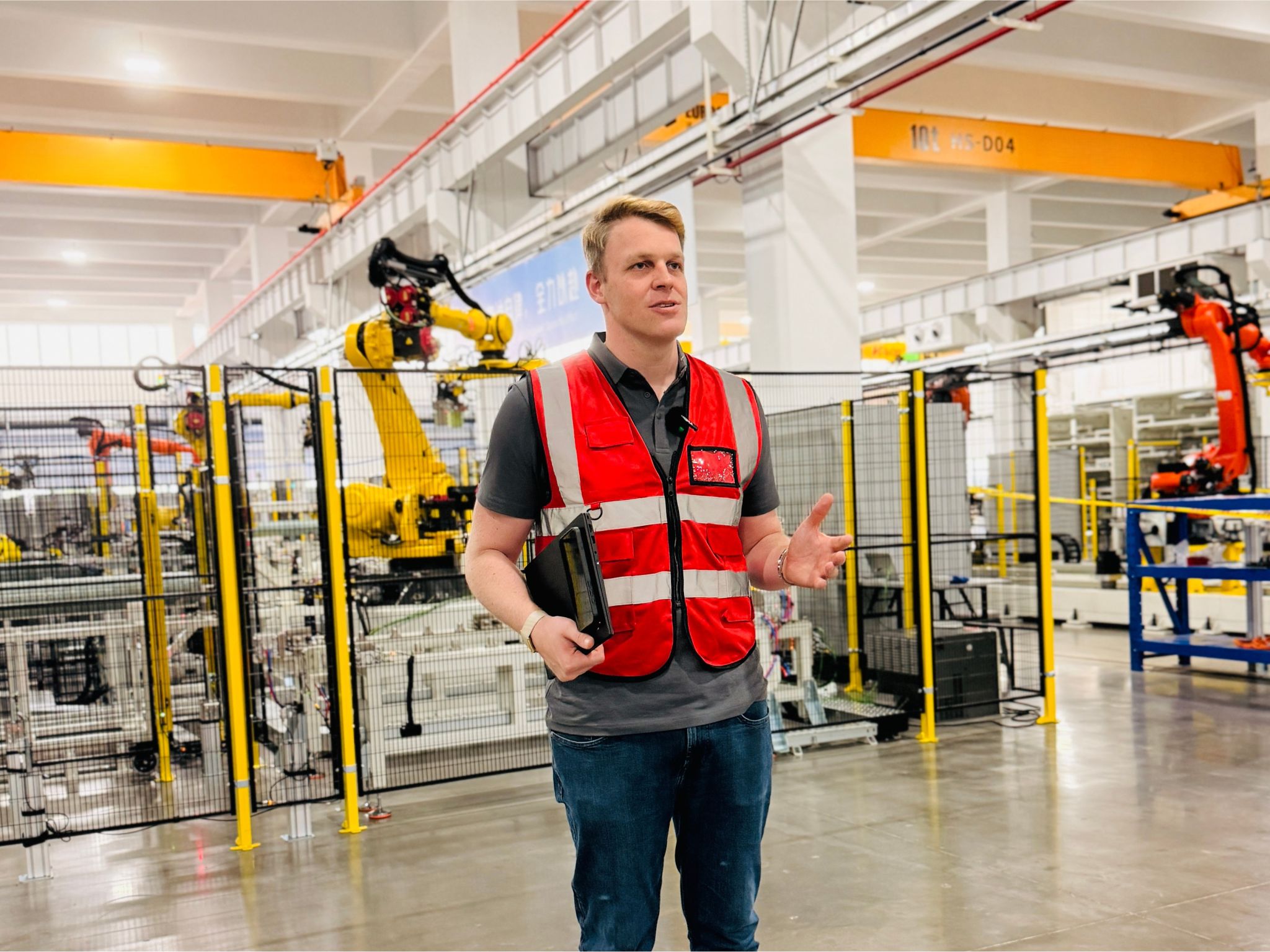
EnerVenue is beginning high-volume production in Changzhou after abandoning an earlier plan to make Kentucky the home of its first large-scale factory. Reuters reported the new Chinese facility is about 95 percent automated and is expected to employ roughly 400 people by year-end.
The timing gives the story an obvious political hook: the factory opening coincides with a Trump-Xi meeting and a broader U.S. push to reshore strategic manufacturing. EnerVenue says the location decision was operational, citing manufacturing skills, engineering depth and supplier density around Changzhou.
For PropertyLabs, the more useful question is what happened to the American building when the original manufacturing plan failed.
Kentucky announced a tenant. The market ended up with an industrial asset.
Kentucky originally announced EnerVenue's Shelby County project as a $264 million first phase creating 450 jobs. The plan called for a one-million-square-foot manufacturing facility on 73 acres, with design, process validation, manufacturing and testing under one roof.
That announcement was a development commitment, not proof that EnerVenue would ultimately occupy and operate the plant. The company's technology and production strategy changed. EnerVenue later declined to take ownership of the building.
But the physical shell had value independent of the original corporate story. The completed Shelbyville building subsequently became the site of a separate battery-manufacturing plan associated with Canadian Solar's e-Storage business.
That is the PropertyLabs thesis: corporate announcements can die while the real estate they set in motion survives.

A factory should be tracked as both a company project and a piece of land
Industrial development databases often inherit the language of economic-development announcements: company, investment, jobs, capacity. Those fields matter, but they can obscure what happens after a tenant changes strategy.
At an address level, the useful record is different. Was land acquired? Was a building application filed? Was the shell permitted? Did construction finish? Did the original occupant take possession? Did another operator inherit the asset? Each is a separate event.
The Shelbyville story demonstrates why a cancelled corporate project does not necessarily mean a cancelled building. It can instead become an industrial reuse event before the first tenant ever operates there.
Changzhou is also a reminder that a factory opening is not the end of the evidence chain
EnerVenue itself makes this distinction. In a September manufacturing update, the company said opening a high-volume line is different from demonstrating industrial scale. Consistent production and customer delivery are the next evidence.
Reuters reported a current annual-capacity target of 250 MWh, rising toward 1 GWh in 2027. Those are company production targets, not PropertyLabs measurements of realized output.
The next physical receipts are therefore different on each side of the Pacific: actual operating throughput in Changzhou and, in Kentucky, the permit, fit-out and production sequence of the successor battery project inside the million-square-foot shell.
Why this crossover matters
Trump-Xi trade politics supplies a large mainstream audience. But the built-environment consequence is not a metaphor. A manufacturing location decision redirected EnerVenue's operating footprint across the Pacific while leaving behind a very large American industrial asset that another battery company could use.
For anyone tracking reshoring through permits, this is a warning against counting announcement wins and losses as if they map cleanly onto buildings. Corporate strategy can move faster than concrete.
Methodology and caveats
PropertyLabs reviewed Reuters' September 22 reporting, Kentucky's original economic-development announcement and EnerVenue's 2026 manufacturing updates. We distinguish announced investment and jobs from completed construction, tenant occupancy, production capacity and realized output.
The original $264 million, 450-job and one-million-square-foot figures describe the Kentucky project's announced first phase. They should not be read as money ultimately spent by EnerVenue or jobs ultimately created by EnerVenue at the site. Likewise, EnerVenue's Changzhou capacity figures are targets unless and until operating evidence establishes realized production.
Sources
- Reuters: September 22: EnerVenue opens its first factory in Changzhou after abandoning Kentucky plan
- Kentucky Cabinet for Economic Development: Original $264 million, 1 million-square-foot Shelby County EnerVenue announcement
- EnerVenue: September 9 manufacturing-line update from Changzhou
- EnerVenue: June manufacturing and Changzhou construction update