The rule change is upstream of the building permit
Governor Wes Moore signed an executive order September 23 establishing a statewide review process for large data-center projects. The framework applies to covered projects when they seek a state permit, incentive, letter of support or other discretionary state action.
The threshold matters. Maryland's county association says the framework covers projects requiring at least 25 megawatts of power at peak, expansions that add 25 megawatts and projects treated as large-load customers under state law.
That does not mean Maryland banned data centers, stopped every permit or replaced local zoning. The final land-use decision remains local. The state has instead inserted a standardized accountability layer into the development stack.
The surprising part is the dashboard
The new Maryland Data Center Accountability Task Force is directed to maintain a public dashboard updated monthly. According to the Maryland Association of Counties, it is intended to identify each covered project's location, owner, projected power and water use, requested state action, task-force determination, commitments and annual reports.
For property research, that is unusually consequential. A proposed data center can become visible as a development event before a conventional building permit tells the full story. The power ask, water burden and state assistance request become searchable characteristics of the project rather than infrastructure details discovered after construction begins.
The task force can classify a proposal as aligned, conditionally aligned or not aligned with the state's principles. Projects that do not meet the framework can lose access to the coordinated process, state incentives, agency assistance and letters of support, although the order does not create a new legal barrier to permits otherwise available under state law.

A 25 MW threshold is really a land-and-infrastructure threshold
Twenty-five megawatts is expressed as an electrical load, but its development consequences are physical. Large-load projects can require substations, transmission or distribution upgrades, backup generation, cooling systems, water infrastructure, stormwater controls and significant industrial land.
Maryland's review therefore asks developers to explain how new power will be supplied without shifting costs to other customers and how necessary grid upgrades will be paid for. Review criteria also include jobs and wages, local hiring, water use, air emissions, stormwater impacts, community benefits and consistency with local zoning and planning.
That is the PropertyLabs thesis: for the AI infrastructure cycle, utility capacity is becoming part of the entitlement story rather than a technical footnote after the real-estate decision.
The state is also making secrecy harder
The order directs state agencies not to sign, renew or extend nondisclosure agreements with data-center developers. That matters because data-center site selection often moves through opaque corporate structures and confidential negotiations long before a project becomes obvious to neighboring property owners.
A monthly project dashboard does not eliminate that opacity, and it will only be as useful as the data ultimately published. But it creates a new public research surface that can be compared against planning applications, zoning decisions, environmental approvals and building permits.
This is not a permit finding
PropertyLabs is not treating today's executive order as evidence that a particular Maryland data center received or lost a building permit. It is a policy and review-process change. Nor does the 25 MW threshold describe building size, construction value or actual electricity consumption after opening.
The correct project sequence remains proposal and site control, local land-use review, relevant state and environmental actions, utility and grid work, permits, construction, commissioning and operation. Individual projects can follow different sequences or overlap stages.
What PropertyLabs would watch next
The highest-value research opportunity is to join Maryland's future dashboard to parcel, zoning and permit records. If the dashboard identifies a proposed site's location and developer before vertical construction, researchers can watch the project move from political announcement to entitlement, infrastructure work and actual permit issuance.
That creates a more defensible signal than inferring a boom from missing records or changing municipal feeds. The source regime itself is changing, but the finding should come from the projects disclosed within it.
The same question now extends beyond Maryland. Texas inserted a state gate in front of some data-center permits, while California expanded what developers must establish around water, power and land use. The AI buildout is increasingly being governed through the infrastructure around the building.
Methodology and caveats
PropertyLabs reviewed Maryland county-government guidance summarizing the executive order, reporting from the September 23 announcement and descriptions of the task force and dashboard. We distinguish the executive order from local zoning decisions, state permits, building permits and construction starts.
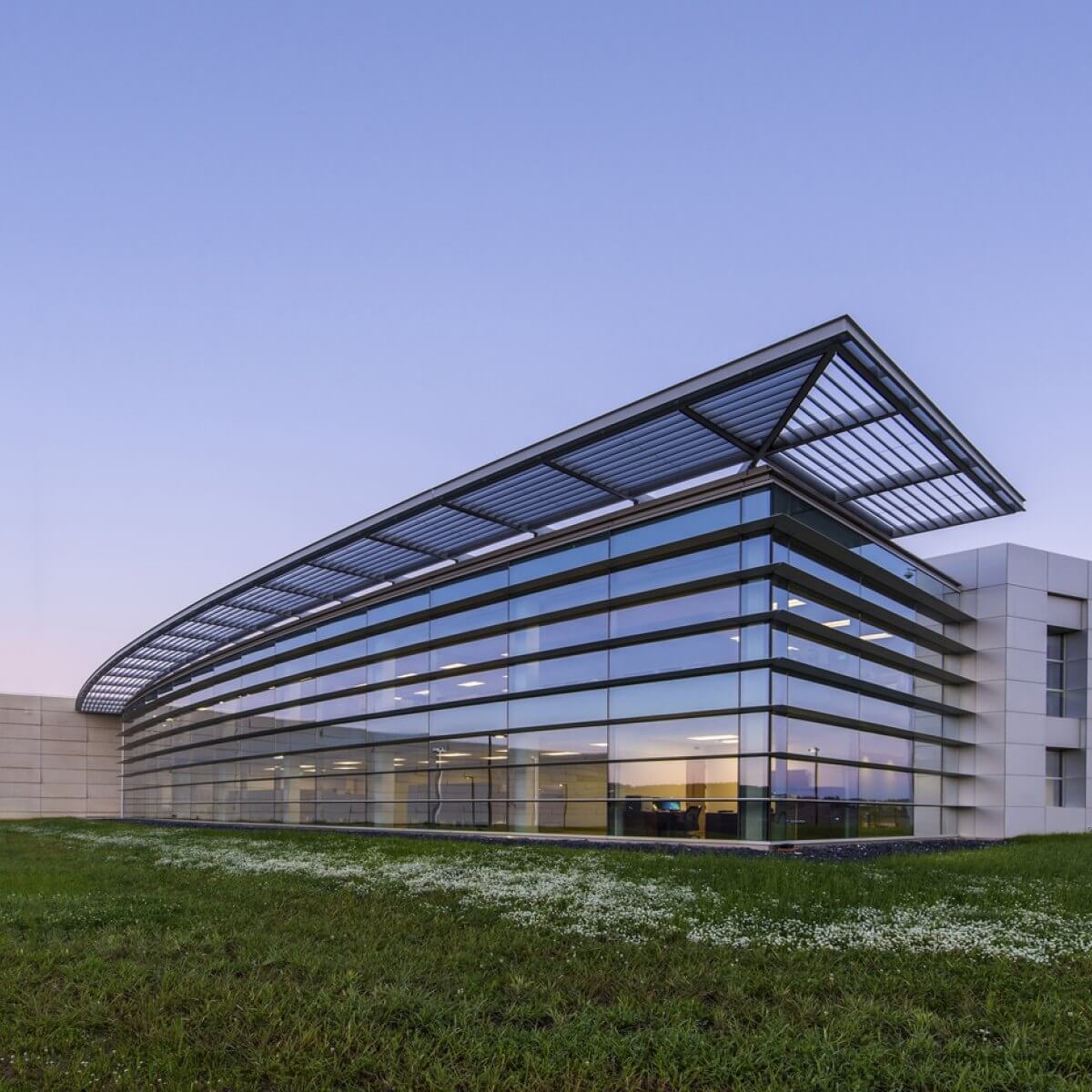
The photographs illustrate the data-center asset class and infrastructure rather than a newly permitted private project affected by today's order. The hero depicts an actual Maryland data-center facility but is not evidence that the facility is subject to the new framework.
Sources
- Maryland Association of Counties: Detailed summary of the September 23 executive order and review framework
- Maryland Matters: Reporting from the September 23 announcement on the task force, dashboard and local authority
- WBAL-TV: September 23 report on the new Maryland Data Center Task Force
- Corgan: Official project photography and description of the Social Security Administration National Support Center in Urbana, Maryland
- Wikimedia Commons: CC BY-SA photography of Wikimedia server infrastructure
