The AI story now has a land receipt
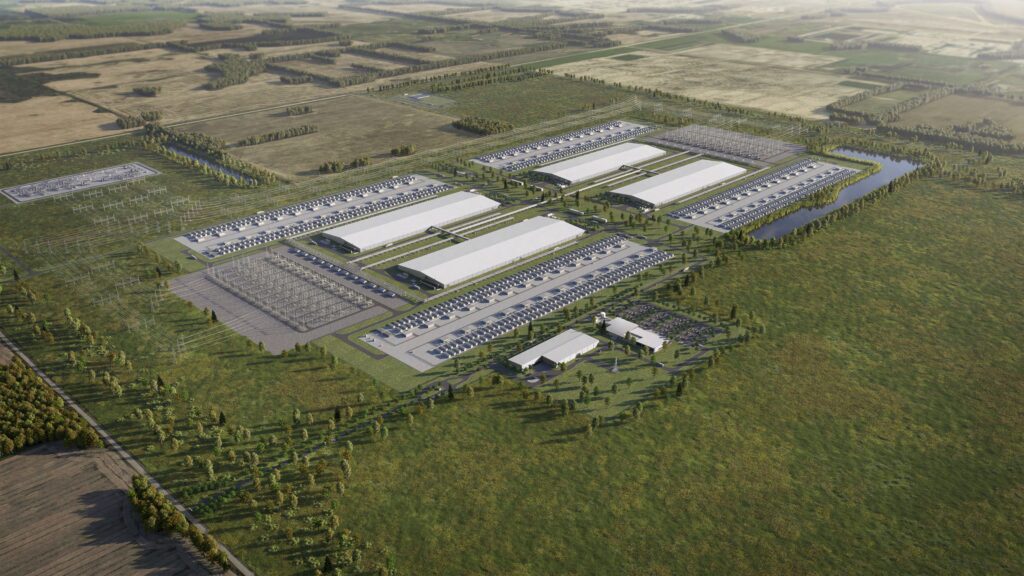
The Realist reported September 23 that the land assembled for Meta's Sturgeon County data-centre campus changed hands for CA$300.1 million. Its reporting identifies approximately 1,754 acres across the site and traces the acquisition through transaction records and the corporate structure used for the property.
That works out to roughly CA$171,000 per acre on a simple division of the reported consideration by the reported acreage. That arithmetic is useful for scale, but it is not an appraisal and should not be read as a comparable-land conclusion without parcel-level adjustments, transaction terms and entitlement context.
The independent cross-check is unusually strong. Alberta's official data-centre page describes the Meta site as about 1,750 acres, while Meta and Sturgeon County identify the same project as a 1 GW campus representing more than CA$13 billion of investment.
CA$300.1M is not the construction budget
The numbers belong to different layers of the development stack. The reported CA$300.1 million is land consideration. Meta's CA$13 billion-plus figure is the broader campus investment. Meta separately says it is investing about CA$60 million in local road and water infrastructure.
None of those figures should be substituted for a building-permit valuation. A land transfer records ownership and consideration. A development permit establishes land-use permission. Site work can begin under its own approvals. Building permits authorize defined construction scopes. Capital investment can include equipment, electrical infrastructure, computing hardware and other costs that never appear as the value on one municipal permit.
That distinction matters precisely because AI campuses are becoming so large that a single headline number can hide several separate real-estate and infrastructure events.
Why does a data centre need 1,750 acres?
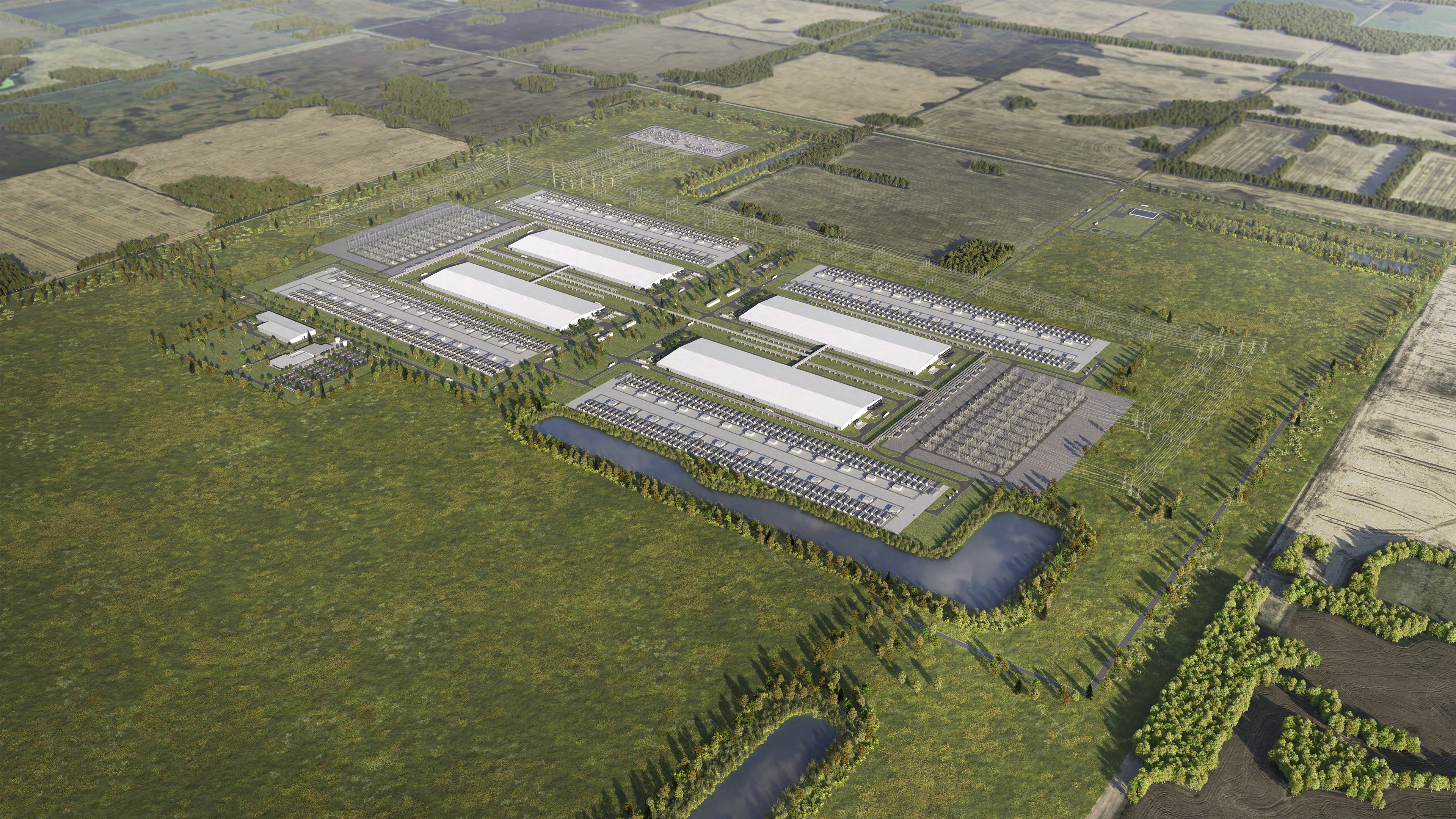
The answer is not simply the data halls. Alberta says the campus is planned for approximately 2.9 million square feet of facility space, but hyperscale AI development also pulls in substations, generation, transmission connections, backup systems, internal roads, stormwater infrastructure, security setbacks and large buffers between industrial activity and neighboring uses.
Meta says the Sturgeon campus will use closed-loop liquid cooling with dry cooling and no operational water use in the cooling loop. The company is also funding new generation and grid infrastructure. Alberta's model for large AI projects increasingly makes those utility systems part of the site-selection problem rather than infrastructure someone else solves later.
That is the PropertyLabs thesis: the AI land grab is not really a search for cheap dirt. It is a search for enormous sites where land, power, transmission, water strategy, industrial zoning and construction logistics can all be assembled at once.
The project has already moved beyond an announcement
Meta and Sturgeon County announced the project and a groundbreaking on July 8. Sturgeon County now lists the Meta project as approved and at final investment decision, with operations targeted for 2028. Meta says roughly 3,000 skilled trade workers are expected onsite at peak construction and more than 300 operational jobs once complete.
Those milestones should still be kept separate. A ceremonial groundbreaking is not evidence that every building scope is permitted or underway. Likewise, an approved master development framework does not mean every future structure on a multi-building campus has reached the same construction stage.
The PropertyLabs research question
The transaction gives researchers a useful anchor that permit data alone often misses: site control. From here, the higher-value sequence is parcel acquisition, land-use approval, site preparation, road and utility work, building permits, electrical and mechanical scopes, commissioning and operation.
That sequence also creates a cleaner comparison with other hyperscale markets. California is pushing power and water deeper into the approval stack, while Maryland is making large-project infrastructure demands more visible before construction. Alberta's Sturgeon project shows the other side of the same phenomenon: enormous industrial land assemblies built around power strategy from day one.
Methodology and caveats
PropertyLabs reviewed the September 23 transaction reporting against Meta, Government of Alberta and Sturgeon County project disclosures. The CA$300.1 million consideration and approximately 1,754-acre transaction figure come from The Realist's reporting and have not been independently reconstructed by PropertyLabs from land-title instruments in this article. The roughly 1,750-acre site size is separately corroborated by Alberta's official project profile.
We do not treat the transaction value as construction value, a permit valuation, an appraisal or evidence of land-price inflation. The approximately CA$171,000-per-acre figure is simple arithmetic on the reported transaction and acreage, not a valuation opinion. The images are project renderings, not photographs of completed buildings.
Sources
- The Realist: September 23 transaction reporting on the Sturgeon County site and ownership trail
- Meta Data Centers: Official July 8 Sturgeon County announcement, project rendering and infrastructure commitments
- Government of Alberta: Official project profile: roughly 1,750 acres, 2.9 million square feet and CA$13B investment
- Sturgeon County: Official project status, development context and July 8 groundbreaking announcement
- Sturgeon County: Official July 8 project announcement and source rendering